Decision Support Tool for Collaborative Water Neutral Urban Planning
Decision Support Tool for Collaborative Water Neutral Urban Planning
 PROJECT LINKPROJECT LINK
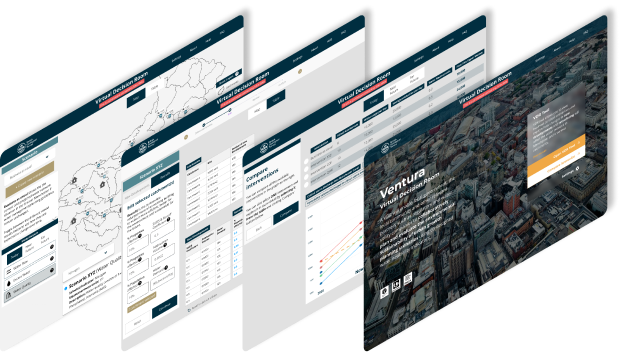
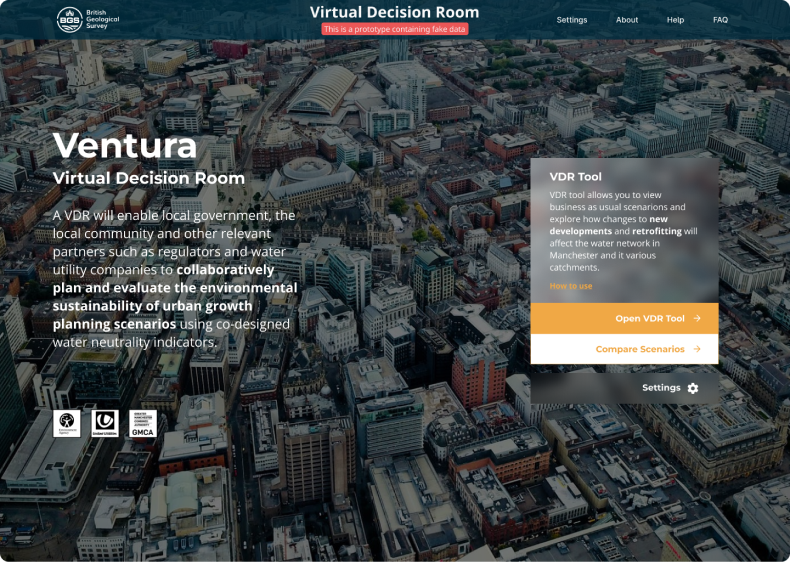
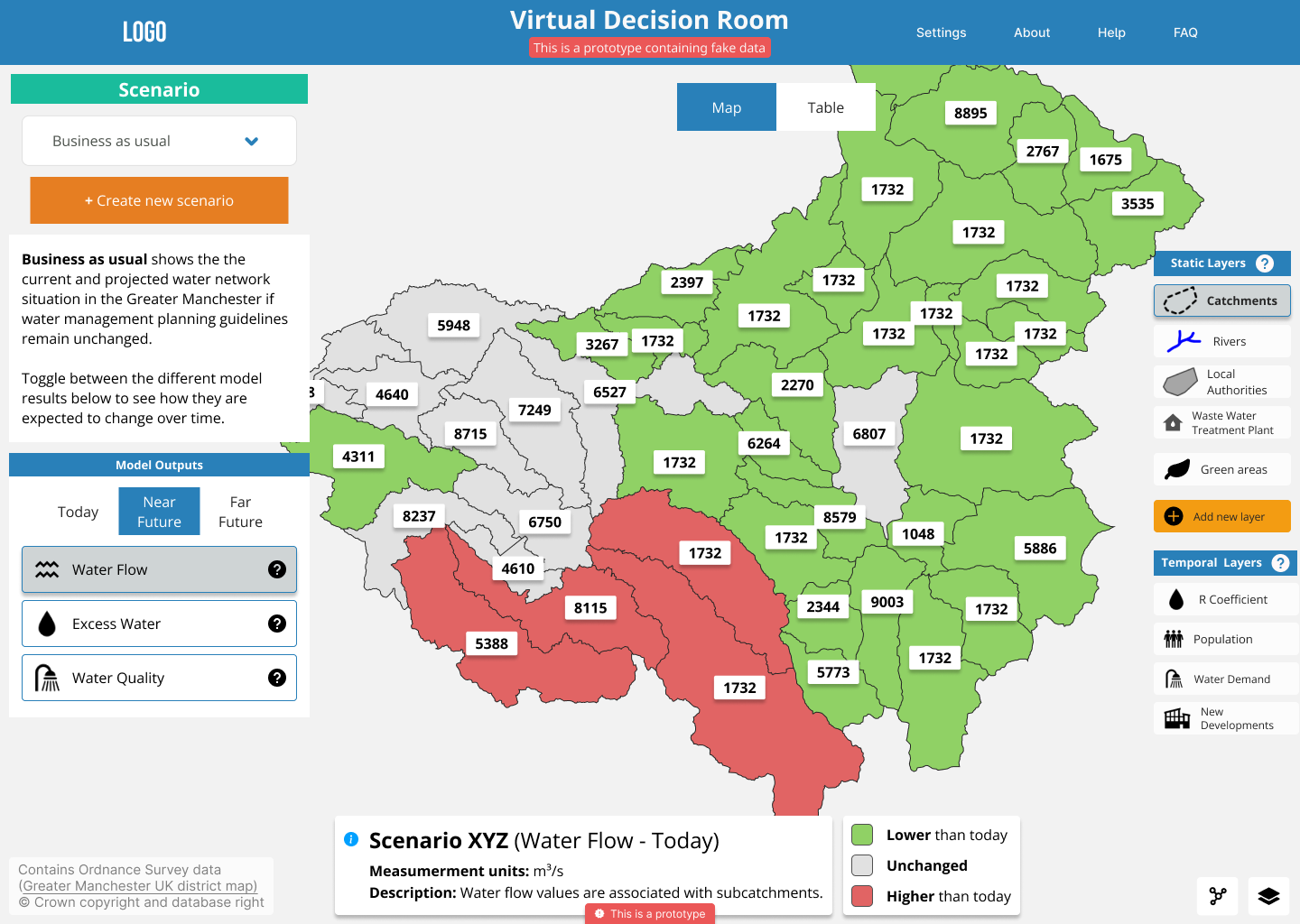
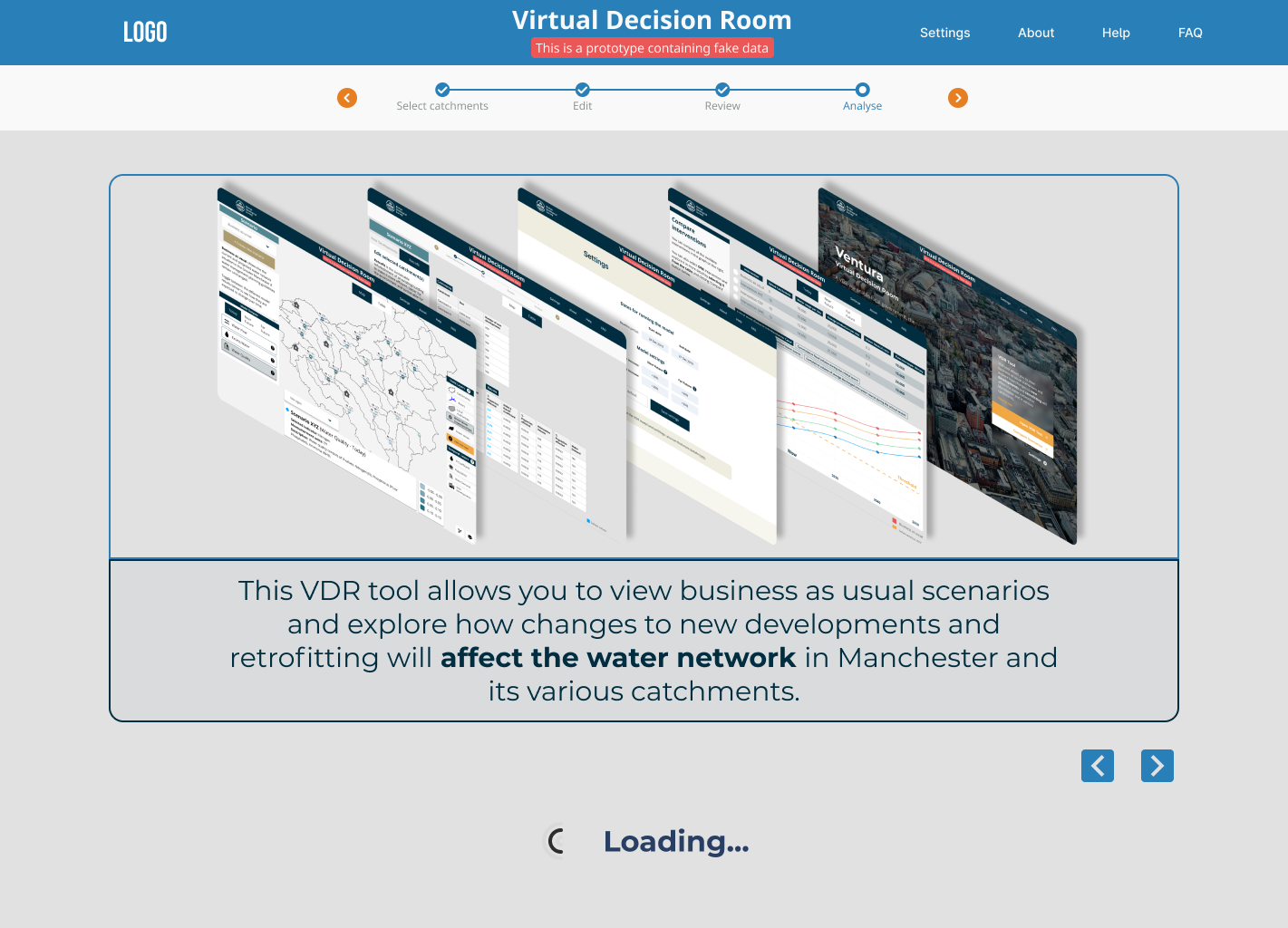
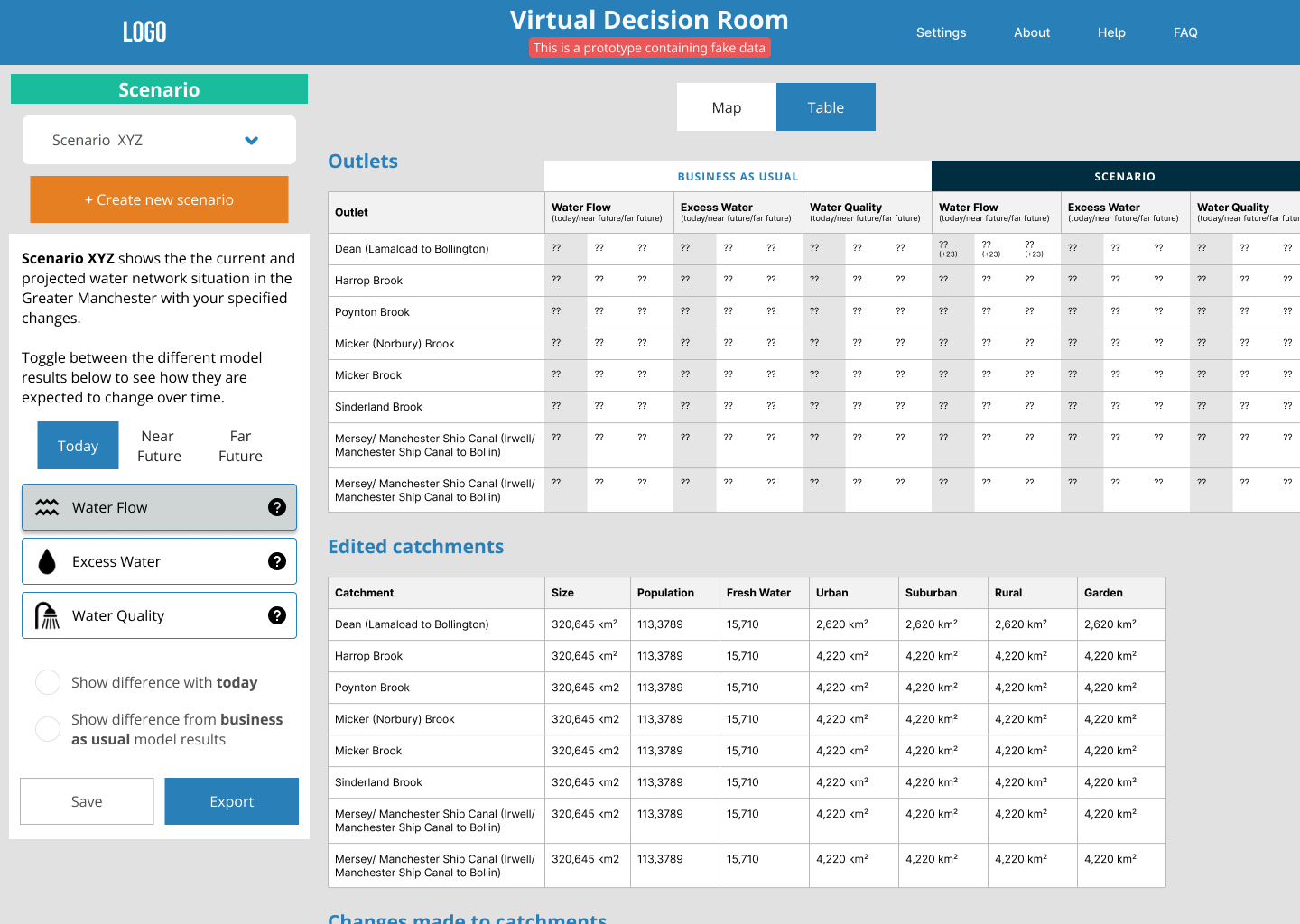
Implemented a user-centered design process for the development of a decision support tool, conducting research, analysis, design, testing, and implementation stages, while incorporating best practices for such tools and addressing common problems, resulting in increased stakeholder buy-in, better understanding of user needs, and efficient collaboration among stakeholders.
Involving users in the early stages of the product development had a number of positive impacts such as:
1. Better understanding of user needs: user research helped us identify the needs and frustrations of ‘trilateral’ group who would be using this Decision Support tool.
2. Increased stakeholder buy-in: if the stakeholders feel that their concerns,needs and frustrations are taken into consideration, they are more likely to provide more feedback and answer questions that might arise throughout theproject.
3. Iterate and validate designs: testing and validating designs early on with the users increased the chance of getting the design right and saved time and cost later at the development stage.
This project is still in early stages of development. Further testing of the working version will allow us to understand the users and the context in which this tool would be used even better.
If we are successful and can create an effective decision support tool for evidence-led water neutral place making, it can have a number of positive impacts:
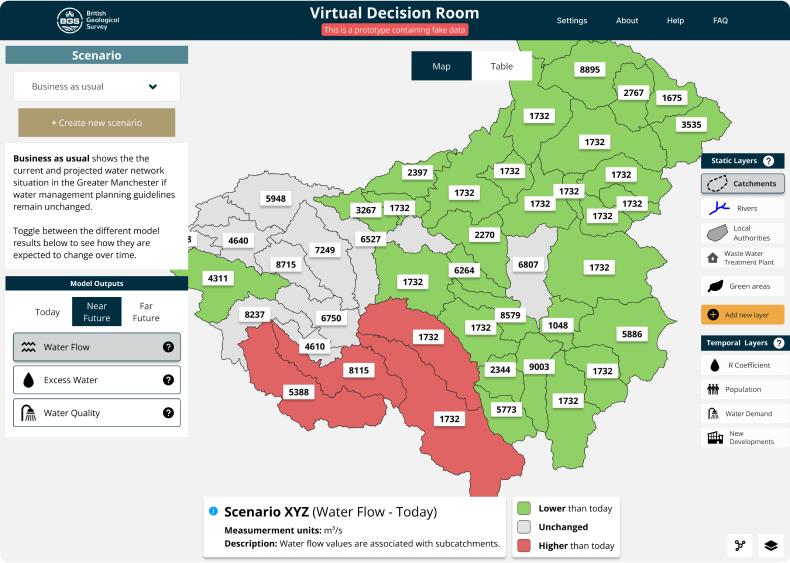
The primary obstacle in this project was fostering efficient communication among user researchers, scientists, and developers. During various phases of the project, conflicts arose regarding the prioritisation of features in the minimum viable product. To resolve these disputes, we consistently reminded ourselves of the needs of the key users and the issues they were attempting to address. Our goal was to enhance collaboration among the “trilateral” group and to enable them to make data-driven decisions without adjusting the mathematical models supporting this tool. Ideas that did not align with these objective were de-prioritized.


Created a visual workflow representation that clearly communicates the complex Spatial Data Delivery Service (SDDS) process.
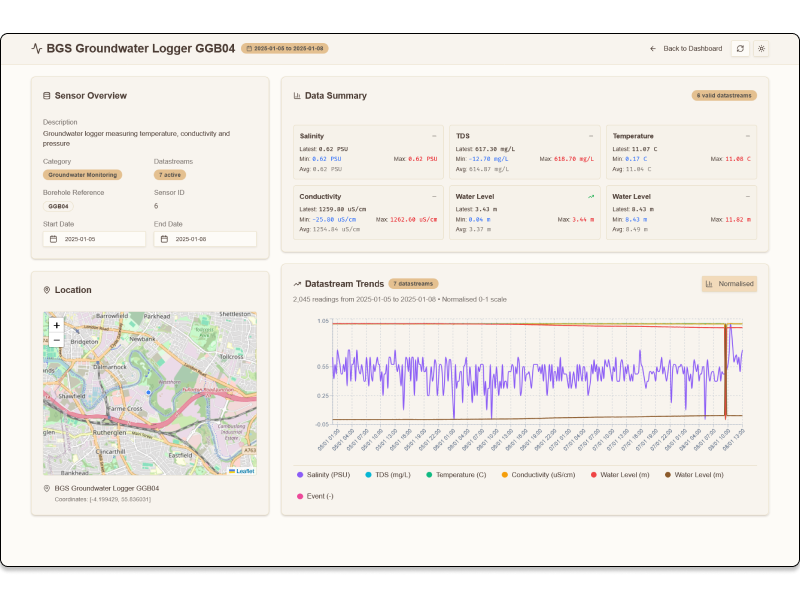
This case study demonstrates how user-centered design, rapid prototyping, and modern development tools can transform complex environmental data into accessible, actionable insights for diverse user groups.
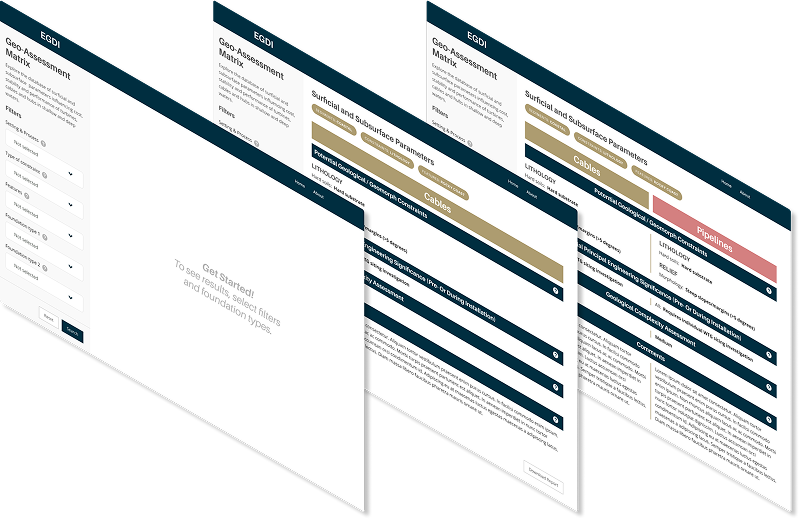
The offshore wind industry needed a simplified, accessible tool to compare geological features for foundation siting decisions. Existing geological assessment data was locked in complex Excel spreadsheets, making it difficult for wind farm developers to quickly evaluate and compare site conditions across different geological environments.
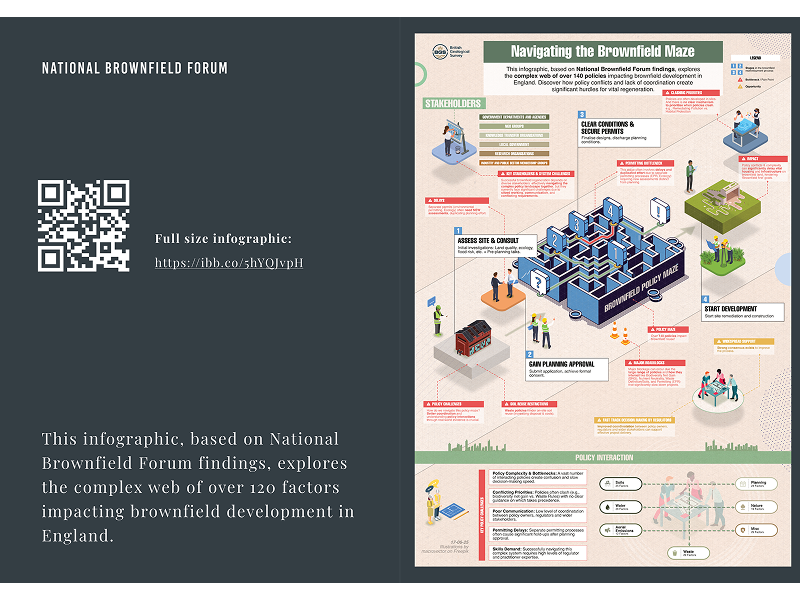
Transforming dense policy research into engaging, actionable insights for government stakeholders and industry professionals